
![[Solved] Can You Deduct Mortgage Interest on a Second Home?](/_next/image?url=https%3A%2F%2Fdynamic-light-ab6e2536d6.media.strapiapp.com%2Fdeduct_mortgage_interest_second_home_banner_97aae88b89.png&w=3840&q=75)
[Solved] Can You Deduct Mortgage Interest on a Second Home?
People often ask me if buying a vacation cabin or second place means getting another mortgage interest write-off. The short answer is yes, but IRS rules aren't as simple as just adding up your mortgage payments. You'll need to itemize your tax return and stay under specific federal borrowing limits. Here is how it actually works for US federal taxes.
Key Takeaways
Before claiming this write-off, keep these core rules in mind:
-
Itemized Deductions Only: You have to skip the standard deduction and use Schedule A.
-
$750,000 Total Debt Cap: That limit covers your primary home and second home mortgages combined.
-
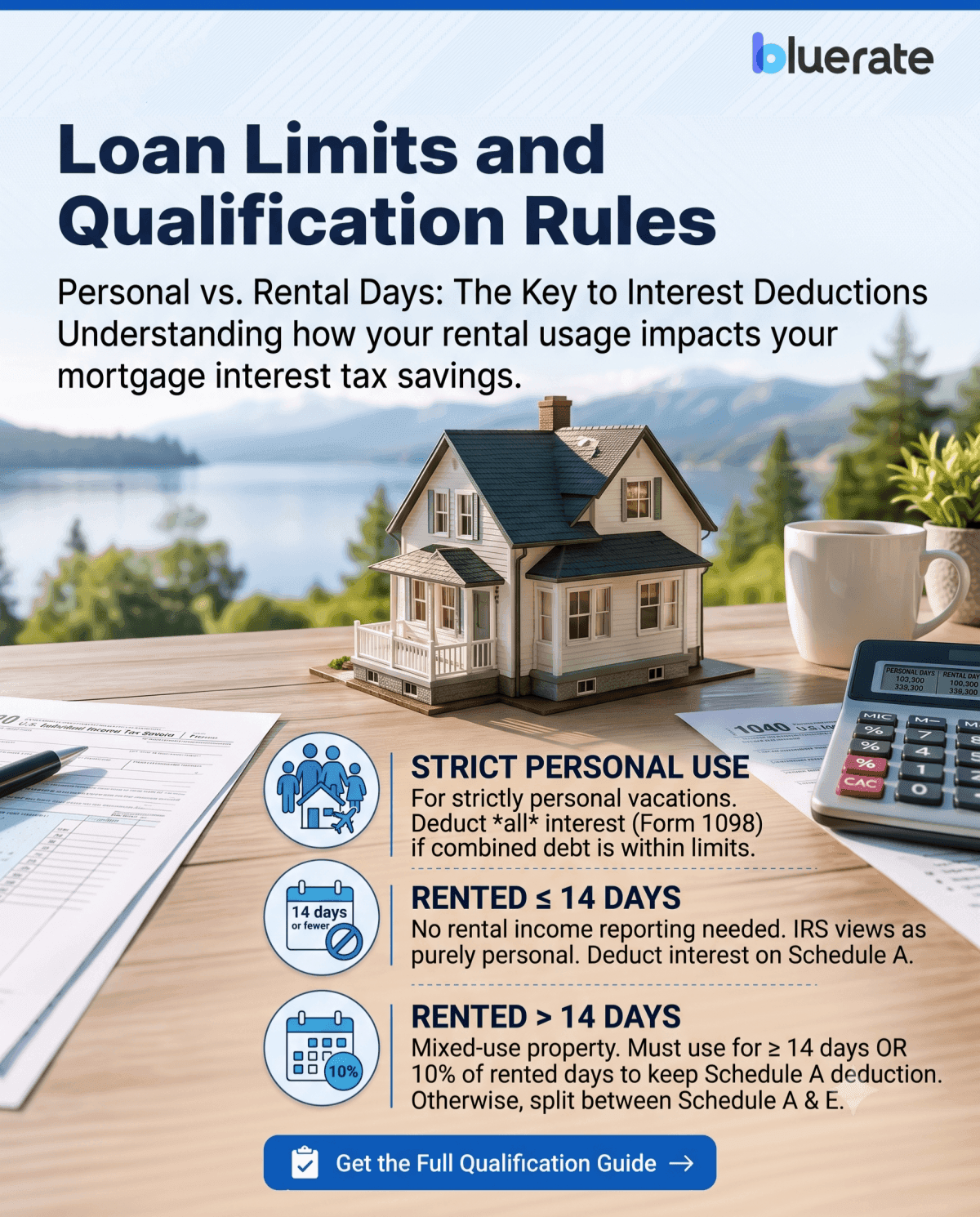
The 14-Day Rule: If you rent the property for 14 days or fewer during the year, the rental income is tax-free, and you can deduct mortgage interest on Schedule A as usual. However, if you rent it for more than 14 days, the property becomes mixed-use. To continue deducting interest as a second home, you must personally use it for at least 14 days or 10% of the days it was rented out (whichever is greater). Otherwise, you must allocate interest between Schedule A and Schedule E.
Is Mortgage Interest on a Second Home Deductible?
Yes, you can deduct interest on a second place, but the IRS lays down clear boundaries. I always check three basic requirements with my clients before writing anything off:
-
Itemization: You must claim the deduction on Schedule A instead of standard rules.
-
Secured Loan: The mortgage has to use the property itself as collateral.
-
Basic Living Requirements: The property must have permanent sleeping, cooking, and bathroom facilities. It must also be a qualified home that you own, such as a house, condo, townhouse, houseboat, or mobile home.

Loan Limits and Qualification Rules
The biggest hurdle I see clients run into is the total debt ceiling. The IRS doesn't give you a fresh allowance for a second place. Instead, it caps the combined mortgage debt on both properties.
If your loans started after December 15, 2017, the federal limit on deductible mortgage debt is generally $750,000 ($375,000 if married filing separately). However, under the One Big Beautiful Bill Act (OBBBA) effective in 2026, this cap may increase to $1 million for many taxpayers, though high-income filers could face a 35% ceiling on the value of their deduction. Mortgages secured before December 16, 2017, remain grandfathered under the older $1 million limit.
If you own more than two properties, you can choose which ones count as your primary and second homes for tax purposes. However, your primary home must be the one where you live most of the time, and your second home must meet the personal-use test (at least 14 days or 10% of rental days, whichever is greater). In practice, many taxpayers select the property with the highest deductible interest as their second home, as long as it qualifies under IRS rules.
How Much Mortgage Interest Can I Deduct on a Second Home?
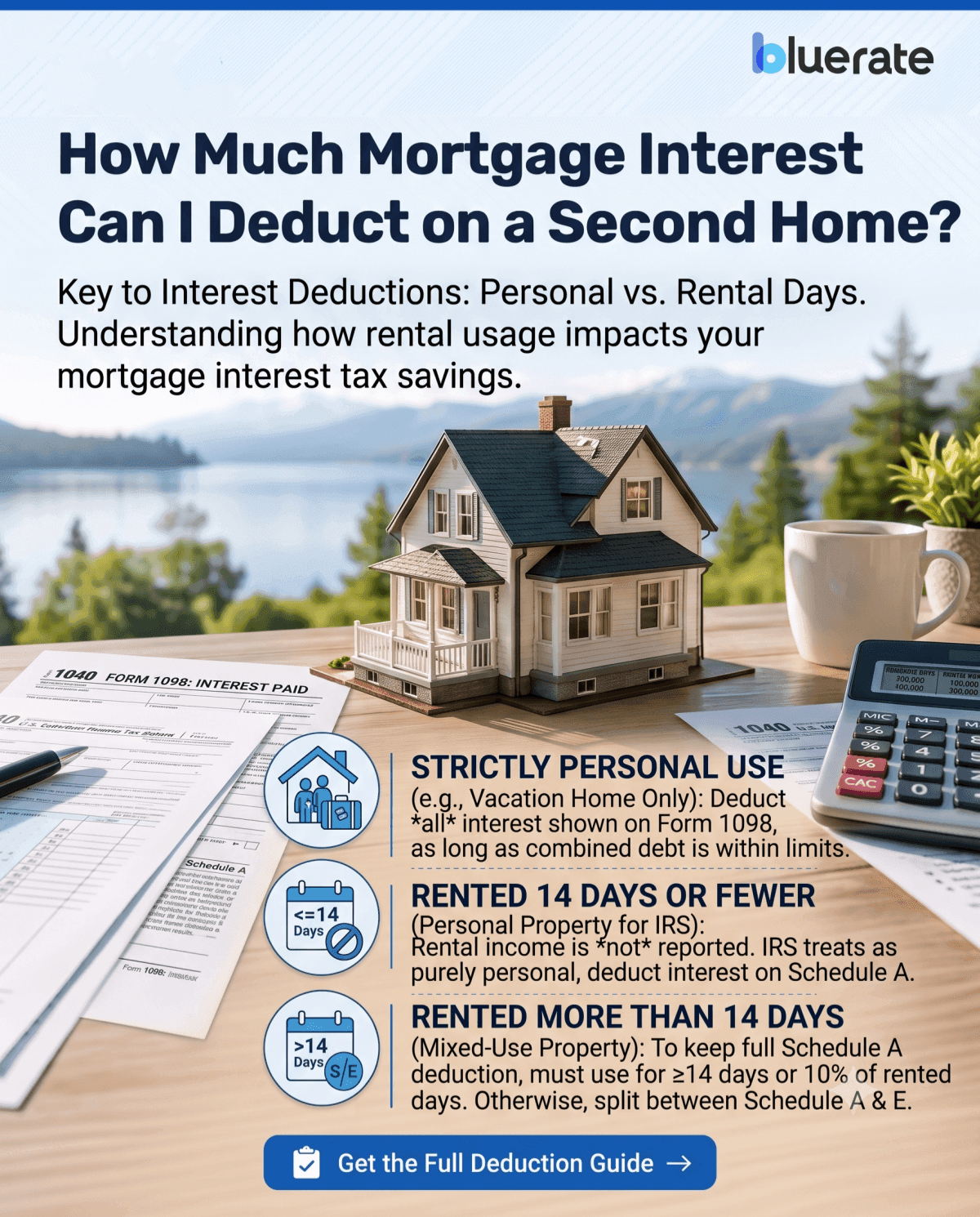
How much you get to write off really comes down to how many days you spend there versus renting it out. If you keep the place strictly for personal vacations, you can deduct all interest shown on your Form 1098, as long as your combined debt stays within the limits.
Things get interesting once you list it on rental sites:
-
Rented 14 days or fewer: You don't even have to report that rental income. The IRS treats the house as purely personal, so you deduct the interest on Schedule A.
-
Rented more than 14 days: It turns into a mixed-use property. To keep deducting personal interest on Schedule A, you must personally use it for at least 14 days or 10% of the rented days. Otherwise, you split interest payments between Schedule A and rental expenses on Schedule E.
FAQs About Second Home Mortgage Interest Deduction
Q1. What qualifies as a "second home" for tax purposes?
Many people assume a second home has to be a traditional house, but the IRS is surprisingly flexible. Any property with a place to sleep, cook, and use the bathroom counts. I've helped clients deduct interest on condos, townhouses, houseboats, and even fully equipped RVs, provided the loan is secured by the vehicle itself.
Q2. Can I deduct interest if I take the standard deduction?
No, you can't double up. To write off mortgage interest on any home, you have to itemize your deductions on Schedule A. When preparing returns, I always compare both paths first. If your total itemized deductions don't exceed your standard deduction, taking this write-off won't actually save you any money.
Q3. What happens if my combined mortgage debt exceeds $750,000?
You don't lose the whole deduction, but you can only write off a partial amount. The IRS uses a specific formula in Publication 936 to cap your interest. Basically, you calculate the percentage of your total debt that fits under the $750,000 limit and apply that same ratio to your total interest paid.
Q4. Can I deduct interest on a HELOC taken out on my second home?
You can deduct HELOC interest on a second home, but only if the borrowed funds were used to buy, build, or substantially improve that specific property. The loan must also be secured by the home itself. Keep in mind that HELOC debt counts toward your total mortgage debt limit ($750,000 or $1 million depending on the loan date), and interest on any amount above the cap is not deductible.
What tax forms do I need to claim this deduction?
You'll need Form 1098, which your lender sends early in the year showing how much interest you paid. When filing, you report that number on Schedule A attached to your Form 1040. If you rented the property out for part of the year, you'll also use Schedule E to split those expenses.
The Bottom Line
Writing off second home mortgage interest can trim your tax bill significantly, but you have to track your rental calendar and loan balances closely. Keep your Form 1098 statements handy and log every day you spend at the property. Because every tax return has its own quirks, I always recommend talking with a licensed CPA or reviewing IRS Publication 936 before filing.
People Also Read
