
How Long Does a Mortgage Application Take? Timeline Here
Once your offer is accepted, the waiting game begins. In the U.S. mortgage market, many purchase loans close in roughly 30 to 45 days from application to closing, but the actual timeline varies by lender, loan type, borrower profile, property, and local market conditions.
In many purchase transactions, well-documented files tend to move more smoothly, while complex income, asset, property, or title issues can cause delays.
Key Takeaways
-
Realistic Timeline: Plan on 30 to 45 days from your application date to closing.
-
The Major Time Sinks: Underwriting, appraisal, title work, and document collection can account for a significant portion of the timeline, and the time required varies widely by transaction.
-
Best Way to Speed It Up: Provide complete and accurate documents as soon as reasonably possible after the lender requests them.
-
Practical Rule: Avoid unnecessary new debt or major financial changes during escrow, and notify your lender before making any change that could affect your application.
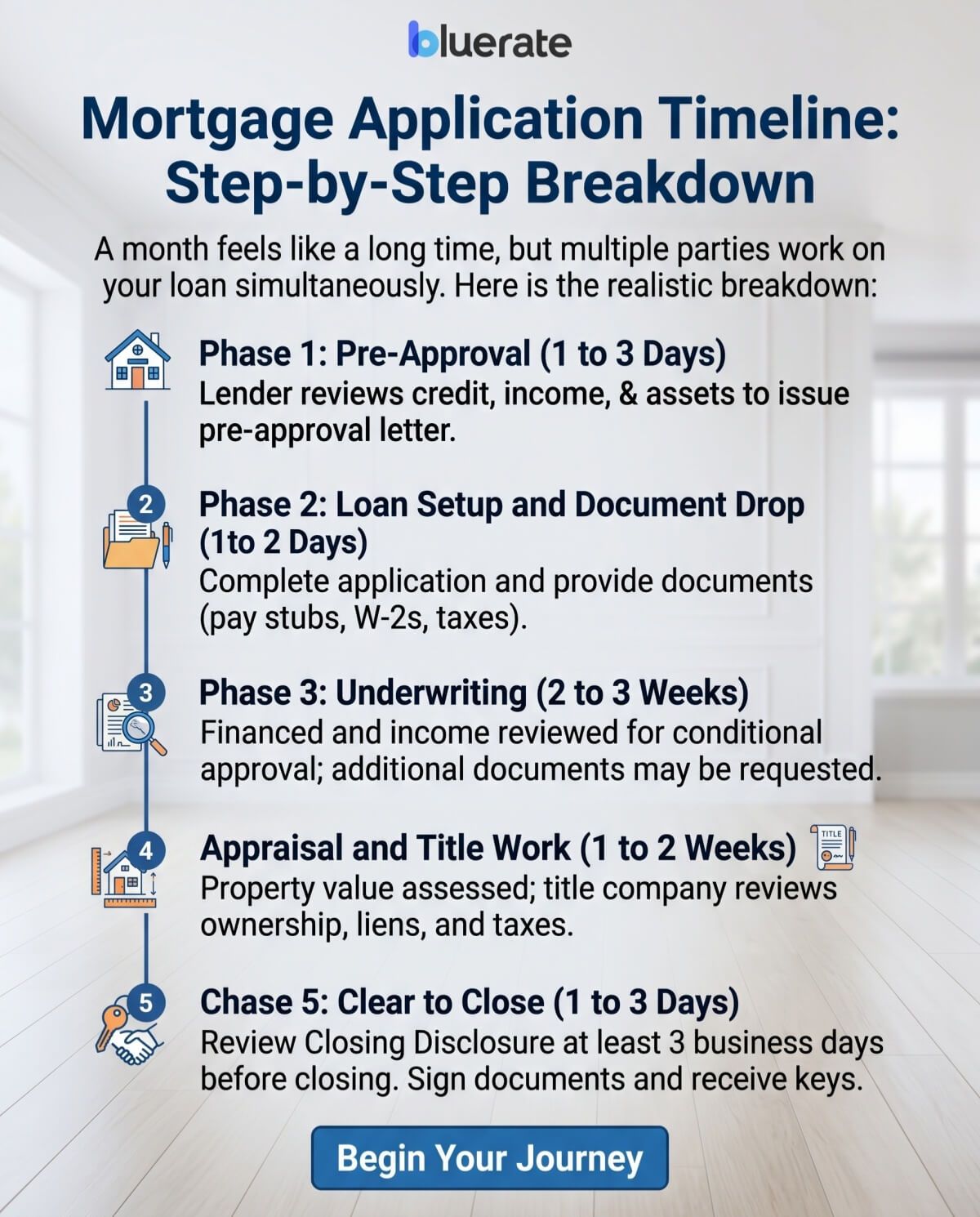
Mortgage Application Timeline: Step-by-Step Breakdown
A month feels like a long time, but several parties work on your loan simultaneously. Here is the realistic breakdown of how each step unfolds:
-
Phase 1: Pre-Approval (1 to 3 Days): Timing varies. The lender typically reviews your credit, income, assets, debts, and other supporting information before issuing a pre-approval letter. A pre-approval is not a final loan approval or a guarantee that the loan will close.
-
Phase 2: Loan Setup and Document Drop (1 to 2 Days): You complete the mortgage application and provide the documents your lender requests, which may include recent pay stubs, W-2s, tax returns, and bank or investment account statements
-
Phase 3: Underwriting(2 to 3 Weeks): Timing varies. An underwriter reviews your finances, income, assets, debts, and property information. The lender may issue conditional approval and request additional documents before the loan can receive final approval.
-
Phase 4: Appraisal and Title Work (1 to 2 Weeks): When required, an appraiser or an approved valuation process assesses the property's value. The title company or settlement agent reviews the public records for ownership issues, liens, taxes, judgments, and other matters that could affect title insurance.
-
Phase 5: Clear to Close (1 to 3 Days): The lender provides the Closing Disclosure at least three business days before closing, subject to limited exceptions and certain changes that may require a new waiting period. You then review the final figures, arrange certified or verified closing funds, sign the documents, and receive the keys when the transaction is funded and completed.
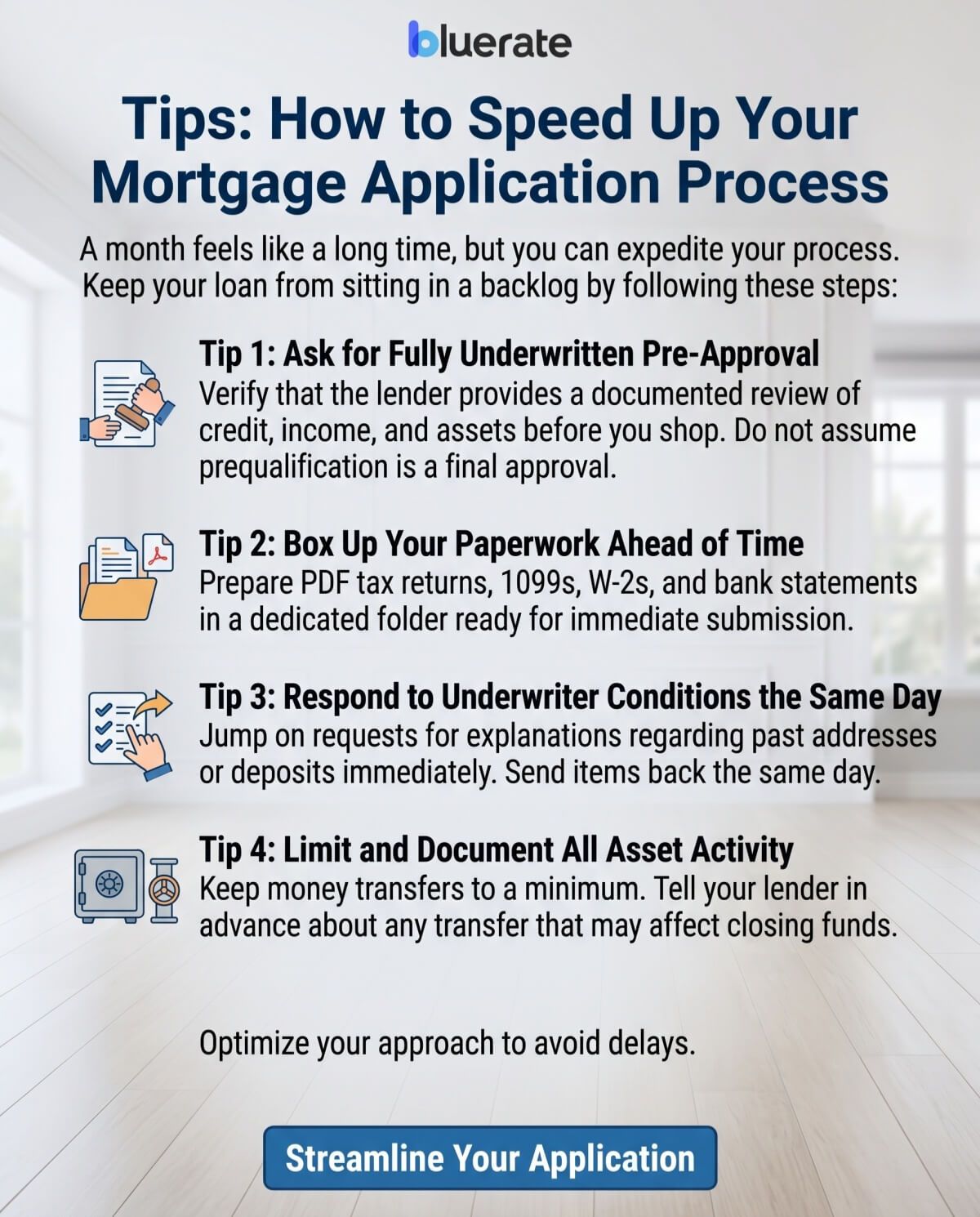
Tips: How to Speed Up Your Mortgage Application Process
You cannot force the bank to work faster, but you can definitely keep your loan from sitting in a backlog:
-
Get fully underwritten upfront: Ask whether the lender offers a fully underwritten or documented pre-approval before you shop, and ask exactly what information was reviewed. Do not assume that a prequalification or automated result is equivalent to a final underwriting approval.
-
Box up your paperwork beforehand: Have your PDF tax returns, 1099s, W-2s, and bank statements saved in a dedicated folder ready to email immediately.
-
Jump on underwriter conditions: When they ask for a letter of explanation (LOE) regarding a past address or deposit, send it back the same day.
-
Leave your money where it is when practical: Avoid unnecessary transfers, and tell your lender in advance about any transfer that may affect funds needed for closing. Transfers between verified accounts may be easier to document, while certain large or unexplained deposits may require additional documentation.
What Looks Bad on a Mortgage Application?
Underwriters dislike mysteries. These items might not kill your deal outright, but they guarantee extra questions and slow your file down:
-
Unexplained cash deposits: Cash deposits whose source cannot be documented may be excluded from the assets available for closing and may lead to additional questions or documentation requests. Do not deposit cash needed for the transaction without first discussing it with your lender.
-
Job changes or employment gaps: A recent job change, employment gap, or move from fixed salary to commission-based compensation may require additional documentation and analysis. It does not automatically disqualify you, but the lender must determine whether the income is stable and eligible for qualifying purposes.
-
High revolving balances: High credit card balances can increase the monthly debts used in underwriting, raise credit utilization, and potentially affect your credit profile. Even if you pay on time, ask the lender before making a large purchase or carrying a higher balance during the mortgage process.
-
A flurry of new credit inquiries: Applying for store credit or personal loans right before your mortgage looks like financial distress.
What Can Fail a Mortgage Application?
Even after getting pre-approved, your loan can fall apart at the finish line if any of these major deal-breakers occur:
-
Employment changes during escrow: Quitting, taking unpaid leave, or becoming an independent contractor can materially change your qualifying income and may require the lender to re-underwrite the loan. Notify your lender before making any employment change. The change may delay, change, or prevent closing, but it does not automatically void every loan approval.
-
Buying a car or opening new debt: New monthly payments can increase your debt-to-income ratio and may require the lender to update the underwriting analysis. Avoid taking on new debt unless you have discussed the likely effect with your lender.
-
A low appraisal with a seller who will not renegotiate: If the appraised value is below the contract price, the lender may limit the loan amount based on the lower value. The parties may need to renegotiate the price, increase the borrower's cash contribution, challenge the valuation, or terminate the contract if the applicable contingency permits.
-
Unresolved title issues: Tax liens, mechanic's liens, probate disputes, and other ownership defects may delay closing or lead the title insurer to require corrective action, a payoff, or specific coverage exceptions before issuing an acceptable title policy.

FAQs About Mortgage Application Timeline
Q1: Can I get a mortgage in 2 weeks?
It is difficult but possible in an unusually well-prepared transaction. It generally requires a complete application, responsive parties, a property that does not create appraisal or title delays, and a lender that can meet the contract schedule. An appraisal waiver may be available for some eligible transactions, but neither the borrower nor the lender can assume that one will be granted.
Q2: Which type of mortgage loan takes the longest to process?
There is no single loan type that is always the slowest. FHA, USDA, VA, and conventional loans can all vary substantially in processing time depending on the lender, underwriting method, property, appraisal, title work, and any required agency review. Some FHA or USDA transactions may take longer when additional property or program-level review is required.
Q3: Why is my mortgage underwriting taking so long?
Underwriters usually get bogged down by self-employment tax schedules, complex rental property income, or appraisal delays in busy markets. Also, if funds were transferred without clear documentation, the underwriter may request bank statements, transfer records, gift documentation, or other evidence showing where the money came from and whether it is an acceptable source of funds.
Q4: Does a mortgage pre-approval expire while I shop for a home?
Yes. Pre-approval letters have lender-specific expiration dates, often around 30 to 60 days. If yours expires, the lender may need updated income, asset, employment, debt, and credit information before reissuing it.
Final Word
Waiting out the 30 to 45 days can be nerve-wracking, but it is just part of the home-buying process. The best thing you can do as a borrower is keep your financial life boring—no new credit, no career jumps, and no mystery bank deposits. Stay in close touch with your loan officer, send files promptly, and you will get to the closing table on time.
People Also Read
