
Best Mortgage Lenders for Low-Income: Top-rated Picks in 2026
I know firsthand how intimidating the housing market looks in 2026. If you're a low-income earner, scraping together a massive down payment while trying to find a lender who actually wants to work with you can feel impossible. But here's the truth: you don't need to be wealthy to buy a home today.
In this guide, I'll walk you through the absolute best mortgage loans and lenders tailored specifically for lower-income buyers. Before you blindly apply anywhere, I highly recommend checking out the Bluerate AI Agent. I love using their free chat feature. It acts like a 24/7 personal mortgage assistant, instantly matching you with the right loan officers who specialize in assistance programs based on your unique financial situation.
Top Mortgage Lenders for Low-Income Borrowers
When evaluating these lenders, I didn't just look at their names or standard rates. I focused on the real lifelines they offer in 2026: down payment grants, low-credit flexibility, and community assistance programs. Here are my top picks.
Rocket Mortgage
Best for: Zero-down payment alternatives and a seamless online application process.
Loan Types Available: Conventional, FHA, VA.
Consideration: You must make 80% or less of your Area Median Income (AMI) to qualify, and the maximum loan limit is strictly capped.
I always mention Rocket Mortgage because they've built a massive online platform that takes the headache out of applying. For low-income borrowers in 2026, their standout feature is the ONE+ program. Instead of the traditional 3% or more, you only need to bring 1% of the purchase price to the table. Rocket's ONE+ program requires 1% borrower contribution.
Rocket provides a 2% non-repayable grant. However, PMI is not waived. It follows standard conventional PMI rules and can only be canceled after reaching 20% equity. It's incredibly helpful if you have a steady income, but you just haven't been able to save up a big lump sum.
Pros:
-
The ONE+ program effectively gives you a free 2% grant toward your home purchase.
-
No PMI is required on the ONE+ loan, instantly lowering your monthly payment.
-
Their highly intuitive online dashboard makes tracking your loan progress incredibly easy.
Bank of America
Best for: Incredible community grants and zero-down solutions in specific neighborhoods.
Loan Types Available: Conventional, FHA, VA.
Consideration: These massive perks are highly restricted by geography. You must be buying in specific, designated census tracts or neighborhoods to qualify.
If you live in or are moving to certain eligible areas, Bank of America is doing something pretty revolutionary right now. Bank of America's Community Affordable Loan Solution offers 0% down in select markets for eligible buyers (typically ≤80% AMI in designated tracts), with closing cost credits up to $10k via grants. Availability is highly geographically restricted.
What I find most impressive is how they handle credit. If you have a low credit score, or no traditional credit history at all, they can use alternative data like your history of paying rent, phone, and utility bills on time. They also offer an America's Home Grant (providing up to $7,500 for closing costs) and a Down Payment Grant (up to $10,000) for qualifying buyers.
Pros:
-
Offers a true 0% down, 0% closing cost mortgage option in select markets.
-
Uses alternative credit history (like utility bills) for loan approval.
-
Generous grant programs that absolutely do not need to be repaid.
Guild Mortgage
Best for: First-time homebuyers looking to stack state and local down payment assistance.
Loan Types Available: Conventional, FHA, VA, USDA.
Consideration: They don't have physical branches in every state, so you might have to handle things primarily over the phone or online if you're not near an office.
I frequently recommend Guild Mortgage to people who feel completely overwhelmed by the homebuying process. They are incredibly hands-on and specialize deeply in working with first-time buyers and lower-income families. What makes them stand out is their extensive knowledge of Down Payment Assistance (DPA) programs.
While big national banks might just offer their own in-house grants, Guild loan officers are trained to help you find and apply for hundreds of local, state, and national assistance programs that can cover your upfront costs. They are experts at figuring out how to layer different grants so you bring as little cash to the closing table as possible.
Pros:
-
Exceptional expertise in finding and stacking local DPA programs to reduce your out-of-pocket costs.
-
Great selection of government-backed loans that cater to lower credit scores, like USDA and FHA.
-
Very personalized customer service, which brings a lot of comfort to first-timers.
New American Funding
Best for: Non-traditional credit histories and flexible manual underwriting.
Loan Types Available: Conventional, FHA, VA, USDA, Non-QM.
Consideration: Because they handle more complex financial files, their origination fees and interest rates can sometimes lean a little higher than standard traditional lenders.
When standard bank algorithms reject your application, New American Funding (NAF) is the place to look. They are fantastic for low-income earners, self-employed folks, or anyone with a bumpy financial past because they do manual underwriting. This means a real human looks at your complete financial picture instead of just relying on a computer's automated "no."
NAF has a strong Pathway to Homeownership initiative explicitly designed to help minority and low-to-moderate-income buyers. If you work a gig job, rely heavily on 1099 income, or just don't fit the perfect mold, their loan officers are usually much more willing to work with you.
Pros:
-
Human-driven manual underwriting provides much-needed flexibility for lower credit scores.
-
Excellent options for self-employed and non-traditional income earners through Non-QM loans.
-
Strong corporate commitment to serving diverse, lower-income communities.
Chase Bank
Best for: Middle-to-low-income buyers wanting a low-down-payment conventional loan with grant potential.
Loan Types Available: Conventional, FHA, VA, DreaMaker.
Consideration: Chase DreaMaker has no income limit. It's available to all qualified borrowers. Fannie Mae HomeReady has the 80% AMI limit. DreaMaker is Chase's branded conventional product with flexible terms. The grant availability is strictly tied to specific property locations.
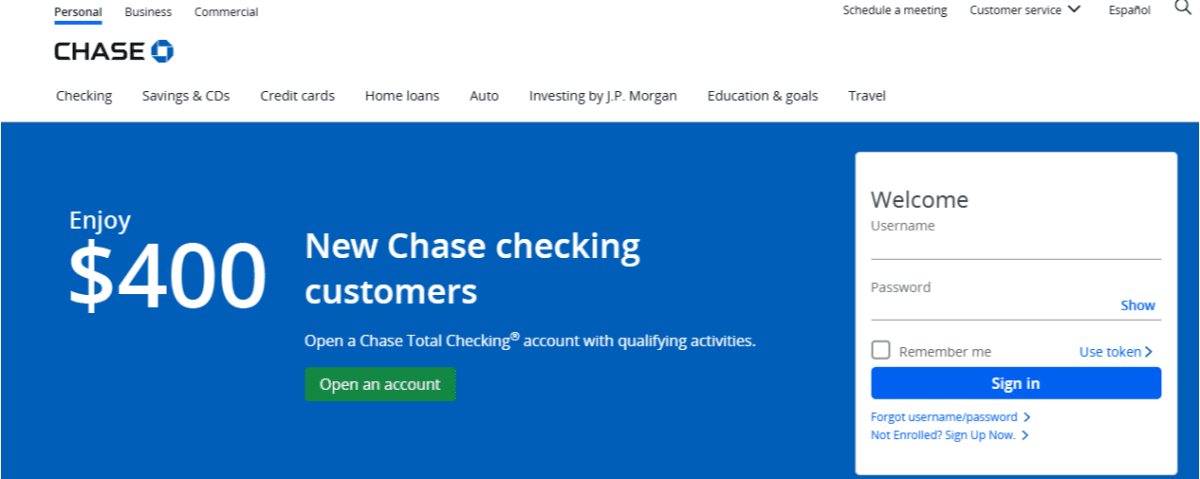
Chase is a massive banking institution, but they have carved out a very specific, helpful niche for low-income buyers. Their flagship program for affordability is the DreaMaker mortgage. It only requires a 3% down payment, and the best part is that the entire 3% can come from gift funds or grants.
You don't necessarily need your own personal savings. To make things even better, Chase offers a Homebuyer Grant of up to $5,000 (and expanded up to $7,500 in certain major housing markets) that you can apply directly toward closing costs or to buy down your interest rate.
Pros:
-
The DreaMaker loan allows your entire 3% down payment to come from external gifts or grants.
-
Offers up to $7,500 in grant money for buyers in designated majority-minority or low-income census tracts.
-
Reduces mortgage insurance requirements compared to standard conventional loans.
Wells Fargo
Best for: Large, direct down payment grants in major metropolitan areas.
Loan Types Available: Conventional, FHA, VA.
Consideration: The Homebuyer Access grant is currently limited to select metropolitan areas, so rural buyers or those outside these specific cities won't qualify.
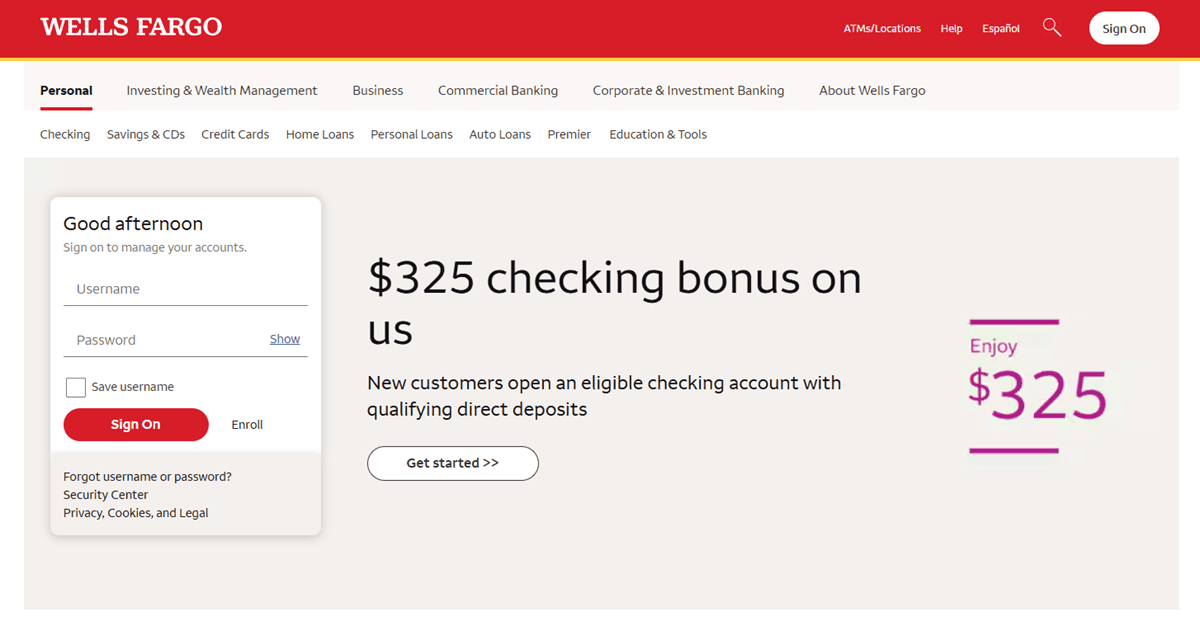
Wells Fargo has been aggressively expanding its footprint in the affordable housing space over the last couple of years. For low-income borrowers in 2026, they offer a massive lifeline: Wells Fargo's Dream. Plan. Home. initiative includes up to $15,000 in down payment assistance grants (increased in 2025) for eligible buyers in targeted markets, not a fixed $10,000.
The money doesn't need to be repaid. If you need help with the closing fees instead, their Dream. Plan. Home. closing cost credit can give you up to $5,000. It's pretty incredible to think you could potentially stack these benefits with other programs to walk into a house with very little out of pocket.
Pros:
-
The $10,000 down payment grant is one of the most generous direct bank grants currently available.
-
Up to $5,000 available specifically to knock out expensive closing costs.
-
A massive network of physical branches if you prefer sitting down with someone face-to-face.
Best Mortgage Loans for Low-Income to Consider
Finding the right lender is only half the battle. Getting matched with the correct loan program is what actually gets you the keys. I always tell people that the "20% down payment" rule is an outdated myth that holds far too many folks back. If you have a lower income, there are government-backed and conventional programs designed specifically for you.
-
FHA Loans: Perfect if your credit score has taken a few hits. You can get approved with a score as low as 580 and only need 3.5% down.
-
USDA Loans: If you're open to living in a rural or suburban area, this is a literal game-changer. It requires zero down payment, and the income limits actually favor low-to-moderate earners.
-
VA Loans: For veterans and active military, nothing beats a VA loan. Zero down payment, no private mortgage insurance, and very forgiving credit requirements.
-
Fannie Mae HomeReady/Freddie Mac Home Possible: These are conventional loans that only require 3% down. They are built for low-income earners, offering significantly reduced mortgage insurance costs compared to standard loans.
If you want to dive deeper into the exact requirements for each of these, I highly suggest reading this breakdown on the best mortgage for low-income.
Tips for Low-Income Borrowers
Buying a home on a tight budget requires a bit of strategy. Here is what I always advise my friends to do before they start house hunting:
-
Check State/Local Assistance: Don't leave free money on the table. Almost every state has Down Payment Assistance (DPA) programs or grants that can cover your upfront costs.
-
Improve Credit: Even with a low income, a high credit score gives you access to the lowest interest rates, which drastically lowers your monthly payment.
-
Focus on Debt-to-Income (DTI): Lenders look closely at how much debt you carry compared to your paycheck. Paying off a small credit card balance before applying can easily bump up your approval amount.
-
Shop Around Lenders & Compare Mortgage Quotes: The biggest mistake you can make is taking the very first offer you get. Rates vary wildly from bank to bank.
Of course, "shopping around" shouldn't mean getting bombarded by spam calls for the next three months. That's why I strongly recommend using Bluerate. You can anonymously compare accurate, real-time rates from over main lenders, not fake teaser rates. Plus, it's a privacy-first platform, meaning you get to choose the Loan Officer that fits your needs without handing your data over to aggressive telemarketers.
FAQs About Best Mortgage Lenders for Low-Income
Q1. Can I get a mortgage if my income is low?
Yes, absolutely. You can qualify by utilizing government-backed programs like FHA or USDA loans, which have very lenient requirements. Combining these with state-level Down Payment Assistance (DPA) grants can help bridge the gap between your savings and the home's price.
Q2. Does credit score affect mortgage amount?
Indirectly, yes. A higher credit score qualifies you for a lower interest rate. A lower rate means your monthly payment is cheaper, which ultimately allows your current income to support a larger total loan amount.
Q3. What is the minimum income required to buy a house in 2026?
There is no legally mandated minimum income. Approval is entirely based on your Debt-to-Income (DTI) ratio. If you carry very little debt, you can qualify for a mortgage even on a modest salary, especially with zero-down programs.
Q4. Can I buy a house making $40,000 a year?
Yes. If you live in an area with a lower cost of living and keep your other debts, like car loans or credit card balances, minimal, earning $40,000 is enough to qualify for an FHA or USDA loan.
Q5. Are there mortgage lenders with no origination fee?
Yes, many lenders offer "no-fee" or zero-origination-fee mortgages. However, be aware that they typically charge a slightly higher interest rate to make up for the waived upfront costs. You'll need to weigh the long-term math.
Conclusion
While having a lower income undeniably adds friction to the homebuying journey, 2026 brings an incredible variety of grants, lenient loan programs, and flexible lenders that make ownership entirely possible. To quickly recap my favorites:
-
Rocket is great for online ease.
-
Bank of America shines with community grants.
-
Guild is your go-to for DPA expertise.
-
New American Funding champions non-traditional credit.
-
Chase excels with its DreaMaker loan, and Wells Fargo offers massive metro-area grants.
The hardest part is often just figuring out where to begin. Don't do this alone. I highly suggest using Bluerate to let their AI Agent analyze your financial profile privately. It will instantly connect you with verified, NMLS-licensed Loan Officers in your area who specialize in FHA, USDA, or Non-QM loans. You'll get real-time rates, zero spam, and you could get pre-qualified 2.5x faster. Take that first step toward your new home today!
People Also Read
