
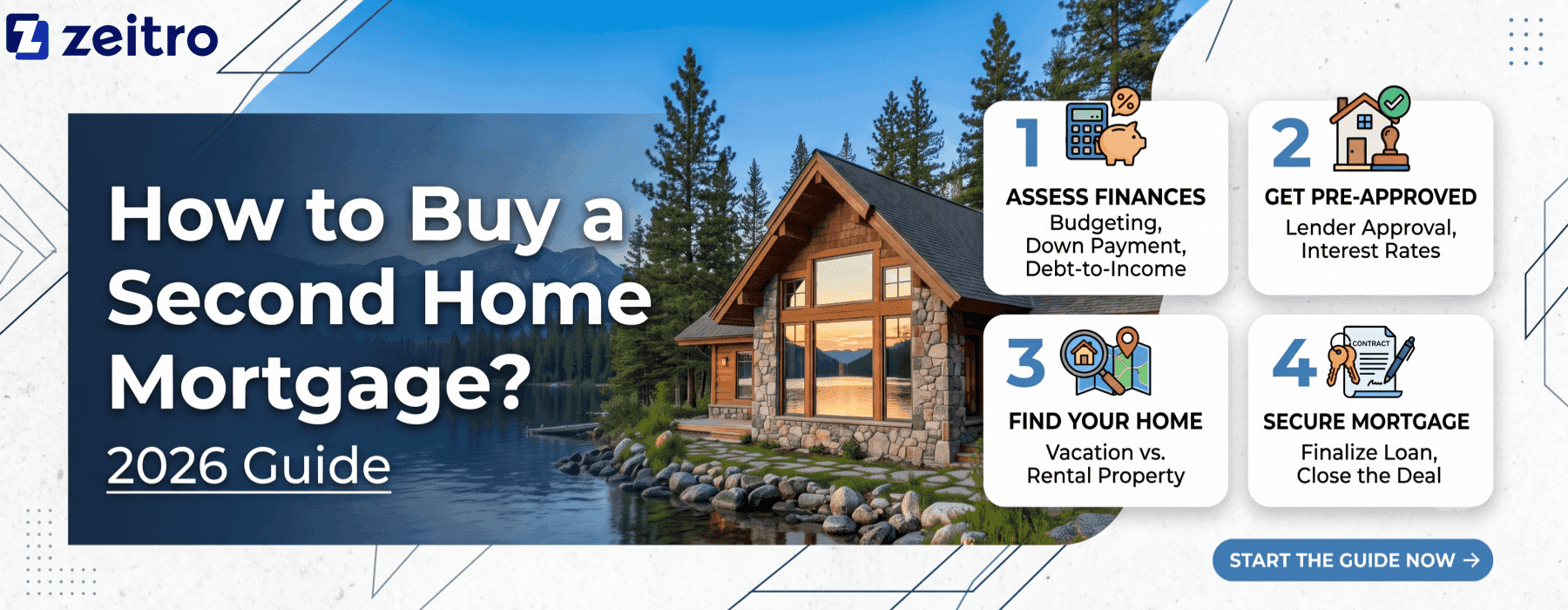
How to Buy a Second Home Mortgage? 2026 Guide
Buying a second home is an exciting milestone, but securing the mortgage often catches buyers off guard. In my years working with borrowers, I've seen how 2026 underwriting guidelines, from stricter credit thresholds to heavier reserve rules, make second home loans tricky. If you want to purchase a vacation getaway without financial surprises, I'll walk you through exactly what you need to qualify and land the best rate.
Key Takeaways
Here are the key rules I always tell my clients to keep in mind:
-
Down Payment: Expect to put down at least 10% to 25%.
-
Credit & Reserves: You'll typically need at least a 640 FICO score (680+ for better pricing), plus 2 to 6 months of cash reserves.
-
Occupancy: You must live there part of the year. Rental pool properties don't qualify.
-
Distance: The property must be a reasonable distance from your primary residence (often interpreted as 50+ miles, but there is no fixed national mileage rule).
Can You Have a Mortgage on a Second Home?
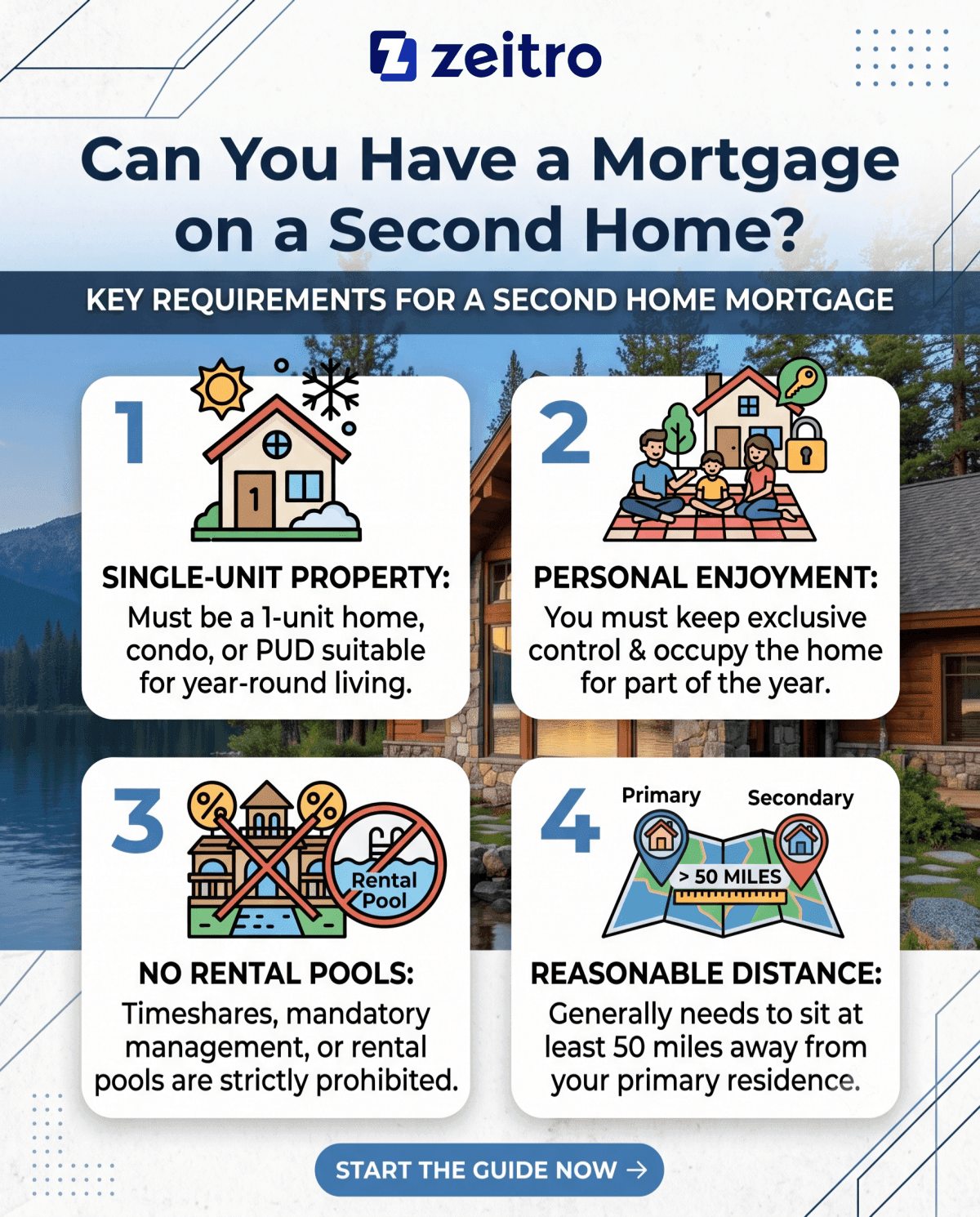
Yes, you absolutely can get a mortgage on a second home. However, mortgage giants Fannie Mae and Freddie Mac hold second homes to strict criteria to ensure you aren't secretly buying an investment property. When I review a buyer's target property, I check for these essential qualifications:
-
Single-unit property: Must be a 1-unit home, condo, or PUD suitable for year-round living.
-
Personal enjoyment: You must keep exclusive control and occupy the home for part of the year.
-
No rental pools: Timeshares, mandatory management agreements, or rental pooling arrangements are strictly prohibited.
-
Reasonable distance: The home generally needs to sit at least 50 miles away from your primary residence to prove true secondary use.
How to Apply for a Second Home Mortgage?
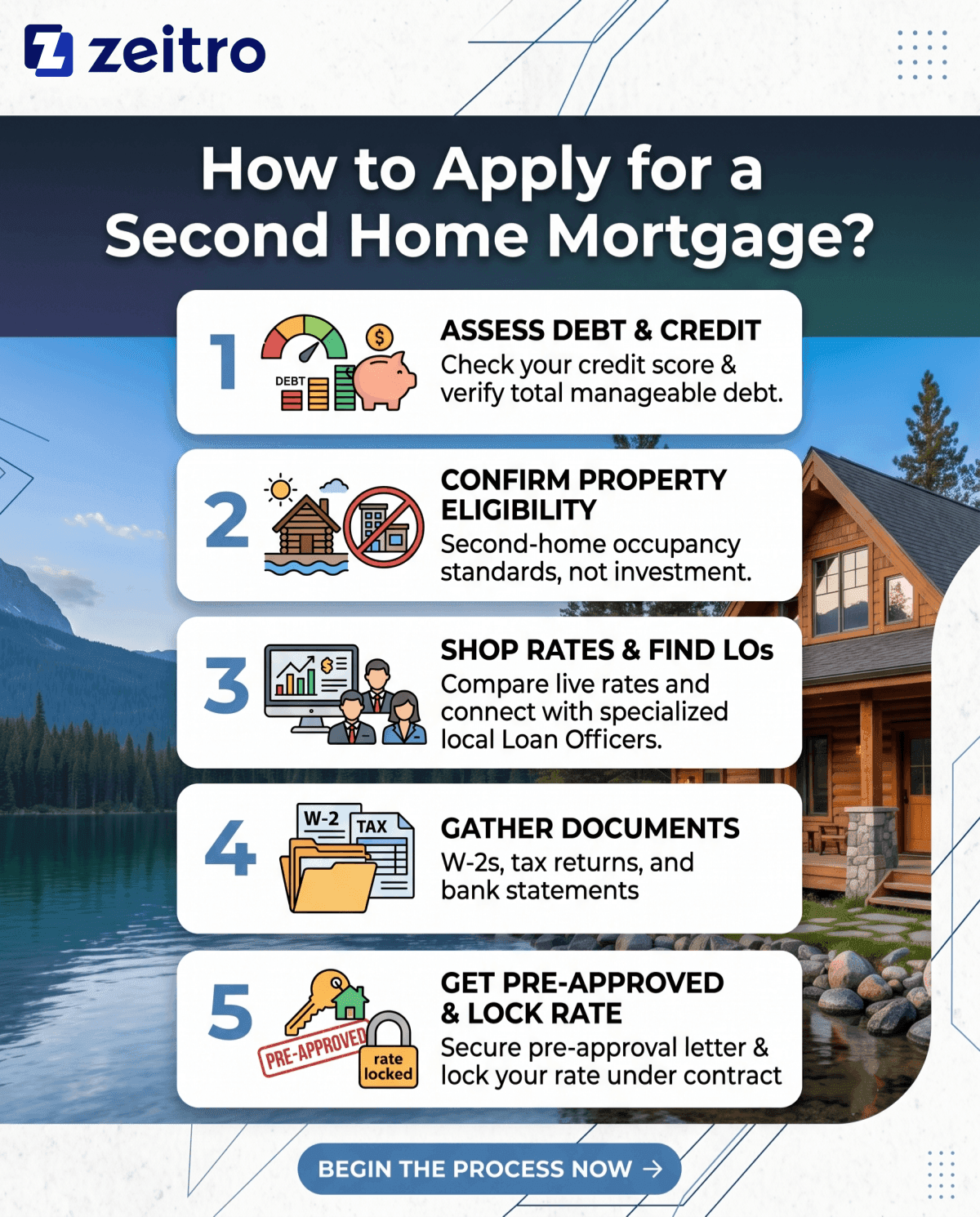
Applying for a second home loan requires a structured approach so you don't overpay on interest or get stuck in underwriting. Here is the step-by-step process I recommend to every buyer:
-
Assess your debt and credit: Check your credit score and verify that your total monthly debts remain manageable alongside two mortgage payments.
-
Confirm property eligibility: Ensure the vacation property meets second-home occupancy standards rather than investment criteria.
-
Shop rates and match with Loan Officers: Because second-home pricing varies wildly between lenders, I always suggest using Bluerate to compare live rates and connect with trusted local Loan Officers who specialize in these programs.
-
Gather financial documents: Prepare your W-2s, tax returns, and bank statements showing required cash reserves.
-
Get pre-approved and lock your rate: Secure your pre-approval letter before placing an offer, then lock in your rate once under contract.
What Do You Need to Qualify for a 2nd Mortgage?
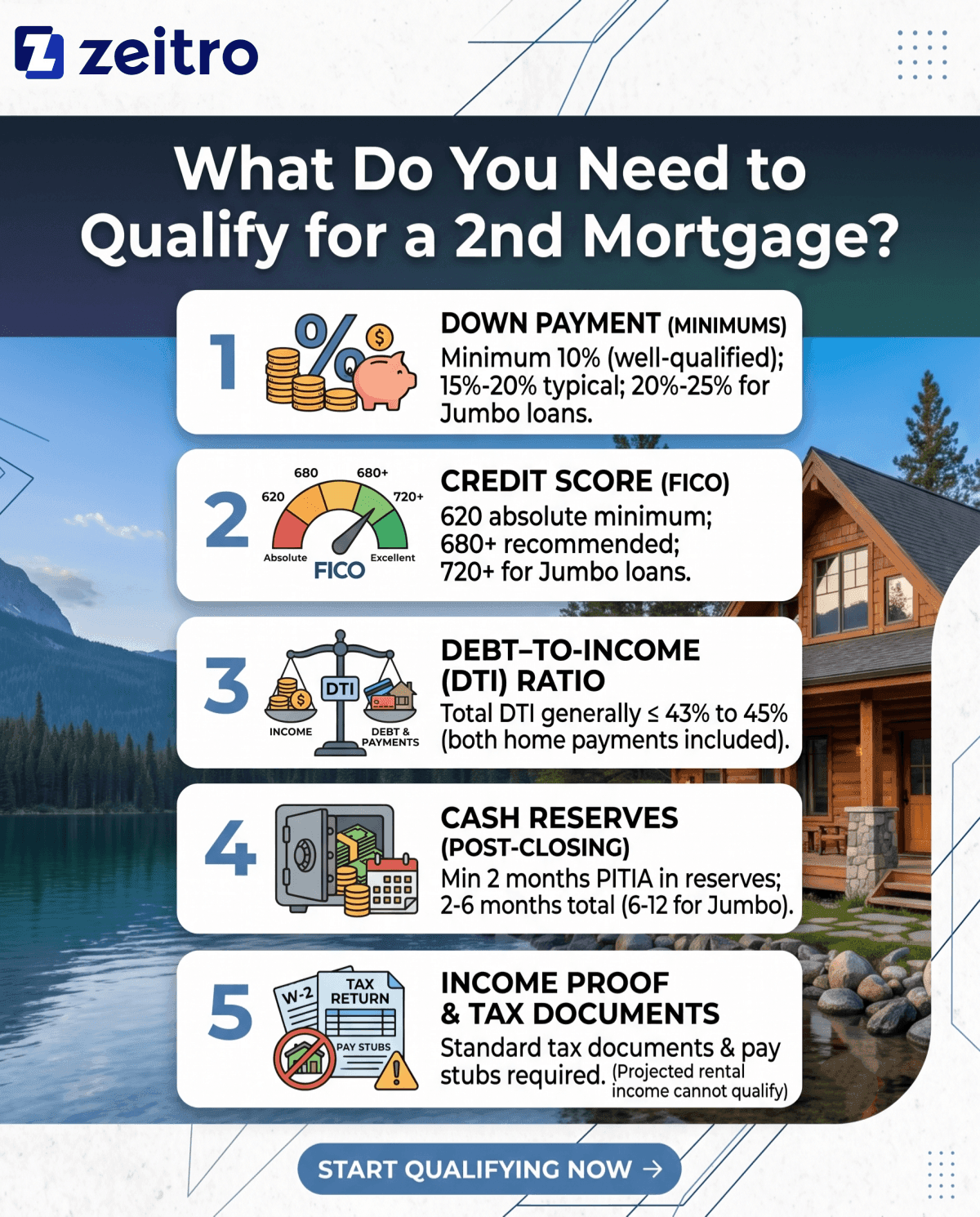
Over the years, I've noticed buyers are often surprised by how much stricter qualifying for a second mortgage is compared to a primary residence. Lenders take on more risk, so they enforce tougher financial benchmarks:
-
Down Payment: Minimums can be 10% for well-qualified buyers, but 15% to 20% is more typical. Jumbo loans often require 20% to 25%.
-
Credit Score: A 620 FICO score is the absolute minimum, but I usually recommend 680+ for better pricing, or 720+ for Jumbo loans.
-
Debt-to-Income (DTI) Ratio: Your total DTI, including both home payments, should generally stay at or below 43% to 45%, depending on the lender and your overall risk profile.
-
Cash Reserves: Expect to show at least 2 months of PITIA in reserves after closing. Many lenders require 2 to 6 months total (and jumbo loans can require 6 to 12 months).
-
Income Proof: Standard tax documents and pay stubs are required. Remember, you cannot use projected rental income from the second home to qualify.
What to Know Before You Get a Second Home?
Before signing a purchase agreement, there are several hidden rules and financial realities you must consider. In my practice, I always warn buyers about these crucial factors:
-
Higher Interest Rates: Second-home mortgage rates typically run about 0.25% to 0.50% higher than primary residence rates, reflecting standard pricing adjustments for secondary properties.
-
No FHA, VA, or USDA Loans: Government-backed loans (FHA, VA, and USDA) cannot be used for second homes. Buyers typically use conventional, jumbo, or non-QM loans. Some borrowers instead designate the new property as their primary residence to use FHA/VA/USDA and convert their former home to a second home or rental, subject to occupancy rules.
-
Gift Fund Limits: Many lenders require the borrower to contribute a portion of the down payment from personal funds when the down payment is below 20%, though the exact percentage varies by lender and loan profile.
-
Double Carrying Costs: You are fully responsible for two sets of property taxes, homeowners insurance, HOA fees, and maintenance expenses year-round.
FAQs About Buying a Second Home Mortgage
Q1. How much deposit do you need for a 2nd mortgage?
You need a minimum 10% down payment for a conventional second home mortgage. However, I usually advise clients to put 20% down if possible. This eliminates private mortgage insurance (PMI) and helps offset the higher interest rates tied to secondary property loans.
Q2. How difficult is it to get a second mortgage?
Getting a second mortgage is harder than financing your first home because lenders view it as a higher risk. You'll face stricter credit requirements, tighter debt-to-income limits, and mandatory cash reserve rules. Still, it remains significantly easier to qualify for than an investment property loan.
Q3. What is the best way to buy a second property?
The best method depends on your liquid cash and equity. Many of my clients use a conventional mortgage for straightforward purchases. Alternatively, pulling equity from your primary residence via a HELOC or cash-out refinance can cover your down payment or allow you to buy the property outright.
Q4. What is the loan term for a second mortgage?
Second home mortgages typically offer standard 15-year and 30-year fixed-rate terms. Adjustable-rate mortgages (ARMs) are also available if you plan to pay off the loan quickly or sell the property within a few years, though fixed rates offer predictable monthly payments over the long haul.
Q5. What are the reasons not to buy a second home?
You might want to hold off if managing two house payments strains your budget or drains your emergency savings. Additionally, strict occupancy rules prevent full-time renting, meaning the property won't generate passive income to offset double property taxes, insurance, and ongoing maintenance costs.
Conclusion
Buying a second home is a rewarding achievement, but navigating tighter reserve rules, higher interest rates, and strict lender guidelines takes careful planning. By preparing your finances early and comparing your loan options, you can secure competitive financing without unnecessary stress. If you're ready to explore your options, I recommend visiting Bluerate to get a free consultation with a local professional Loan Officer and lock in the best rate today.
People Also Read
